





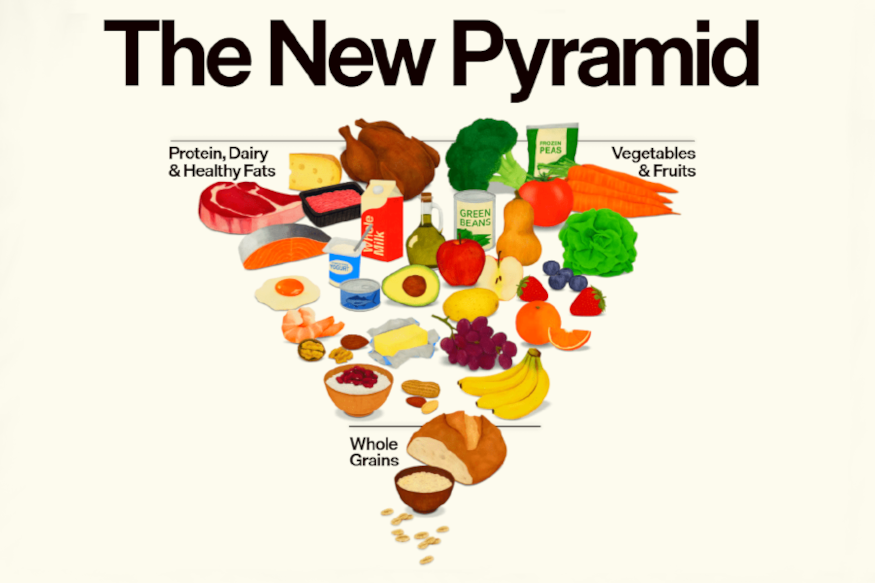
For decades, U.S. dietary guidance was often visualized as a food pyramid built on a wide base of carbohydrate-rish foods, particularly grains. Protein and fats appeared higher in the pyramid and were typically recommended in smaller amounts according to earlier editions of the Dietary Guidelines for Americans (DGAs). The impetus for changes in dietary guidelines is clear - under the previous DGAs, America has experienced a continuous rise in obesity and metabolic disease, leading to high incidence of preventable chronic diseases that strain.
The 2025-2030 DGA reflects an evolving understanding of metabolic health and nutrition science. Recent discussions around the guidelines emphasize a "Real Food First" approach, encouraging diets centered on whole foods such as vegetable, fruits, and protein sources while discouraging ultraprocessed carbohydrates and added sugars.¹ The American Academy of Value Based Care (AAVBC) supports the direction of the 2025-2030 DGA, particularly its focus on whole foods, balanced protein intake, and reduced reliance on ultraprocessed foods including carbohydrates and added sugars – principles that position nutrition as an upstream driver of chronic disease prevention and reflect a broader food as medicine approach.
This shift comes during a period in which obesity and metabolic disease have steadily increased in the United States, including throughout the decades in which earlier dietary guidelines were implemented (1980-2025). Today, approximately 100 million or 40.3% of U.S. adults live with obesity, and 22 million or 9.4% experience severe obesity, both of which increase the risk of diabetes, cardiovascular disease, and other chronic illnesses.²
For clinicians and healthcare systems working within value-based care models, improving dietary patterns and encouraging an active lifestyle represents an important opportunity to address these trends, reduce long-term healthcare utilization, and improve population health outcomes. Increasingly, this approach aligns with the concept of "food is medicine," which positions nutrition as a core clinical intervention for preventing and managing cardiometabolic disease and advancing health equity.¹⁰
Within primary care settings, integrating nutrition counseling and dietary planning reflects a preventive medicine strategy that addresses the root causes of disease before high-cost complications and hospitalizations occur. While nutrition care may require upfront investment, evidence suggests it is cost-effective over time, with most studies demonstrating improved outcomes compared with usual care. ¹¹ In addition, structured behavioral counseling interventions show dose response relationships, where increased contact and follow up lead to greater improvements in weight and cardiovascular risk factors.¹²
Earlier DGAs (from 1980 to 2025) emphasized reducing fat intake, particularly saturated fat, as a potential strategy to prevent cardiovascular disease, which remains the leading cause of death in the United States.³ These guidelines often replaced reduced fat calories with increased carbohydrate intake, including recommendations that allowed up to 10% of daily calories from added sugars. Under these guidelines, the American obesity rate surged to over 40% and contributed to the widespread onset of preventable, core chronic diseases including diabetes, cardiovascular diseases, and non-alcoholic fatty liver disease.
Over time, nutrition science increasingly emphasized overall dietary patterns rather than focusing solely on individual nutrients. Researchers also gained a better understanding of how highly processed foods, refined carbohydrates, and added sugars impact metabolism and energy balance.⁴
A notable public health success within the past decade was the elimination of trans fats from the U.S. food supply. Evidence demonstrating their role in cardiovascular disease led the U.S. Food and Drug Administration to determine that partially hydrogenated oils were no longer safe for use in foods.⁵
As research evolved, the conversation around dietary health expanded beyond fat intake to include the degree of food processing, nutrient density, satiety and its impact on overall food intake, and the balance of macronutrients. These insights helped shape the updated framework reflected in the 2025–2030 DGA and reinforce the growing recognition that nutrition interventions delivered in clinical settings can serve as upstream drivers of improved health outcomes – consistent with “food is medicine” strategies focused on prevention, cost effectiveness, and long term disease reduction.¹⁰
The 2025-2030 DGA emphasizes several principles that pivot away from the nutrient-focused and reductionist approach of prior DGAs towards a more holistic, overall dietary pattern-focused and whole-food oriented approach:
A clear dietary priority in the 2025-2030 DGA is the intake of whole fruits and vegetables. These foods provide fiber, vitamins, minerals, and phytochemicals that support metabolic health and reduce the risk of chronic diseases such as cardiovascular disease, diabetes, and several cancers.¹,6
In the context of an inverted pyramid, whole plant foods move toward the base of daily dietary intake, replacing refined carbohydrates as the foundation of healthy diets.
Another notable shift in the guidelines is increased attention to adequate protein consumption. Protein plays an important role in:
Encouraging balanced protein intake allows individuals to adapt dietary recommendations to their preferences and cultural dietary traditions. Examples of protein sources include:
Within the re-balanced pyramid, protein-rich foods move closer to the center of daily intake, supporting metabolic balance and nutritional adequacy.
At the same time that whole foods and protein sources move toward the base of the pyramid, ultraprocessed foods have been removed. Ultraprocessed foods commonly contain:
Controlled dietary studies demonstrate that diets high in ultraprocessed foods can lead to increased calorie intake and weight gain, even when nutrient content appears similar.⁷
Reducing these foods helps restore balance to the inverted food pyramid, reducing the role of highly refined carbohydrates within daily dietary patterns.
Many elements of the updated Dietary Guidelines resemble dietary patterns associated with longevity and improved metabolic health in other parts of the world:
The Mediterranean diet emphasizes vegetables, fruits, legumes, fish, whole grains, and healthy fats such as olive oil while limiting processed foods. This dietary pattern has consistently been associated with lower cardiovascular disease risk and improved longevity.⁸
Similar principles are found in the Blue Zone diet, which is modeled after the diets of people with the highest longevity including in Sardinia and Ikaria. The Blue Zone diet is centered on:
These dietary traditions closely resemble the re-balanced food pyramid, where whole foods form the base and processed foods occupy a smaller portion of daily intake.⁹
From the perspective of the AAVBC, nutrition plays a central role in preventive healthcare. Several aspects of the 2025–2030 DGA align closely with value-based care priorities, particularly when combined with individualized and sustainable lifestyle strategies.
Diets centered on vegetables, fruits, whole foods, and balanced protein sources support long term metabolic health. These foods tend to be more nutrient dense and more satiating compared to ultraprocessed foods, helping individuals better achieve caloric needs for growth and development, maintenance of muscle mass, and prevention of malnutrition and chronic diseases.
Caloric needs vary based on age, activity level, and metabolic health. In particular, older adults often require fewer calories than earlier in life, but still need sufficient protein and nutrients to maintain muscle mass and function. Aligning caloric intake with individual needs is essential for preventing both overconsumption and undernutrition.
Food alone is not sufficient to maintain metabolic health or preserve muscle mass. Dietary strategies should be combined with regular physical activity, including both aerobic exercise and resistance training.
Avoiding a sedentary lifestyle is critical, as physical activity helps:
Effective dietary guidance must remain:
Healthcare systems that integrate nutrition education, physical activity, and preventive care strategies are better positioned to reduce chronic disease burden while improving patient outcomes.
The AAVBC strongly supports the 2025-2030 DGA: The message is simple – eat real food.
The 2025–2030 Dietary Guidelines for Americans reflect a broader shift in how nutrition science understands healthy eating patterns. Rather than building diets on a foundation of refined carbohydrates, the emerging framework emphasizes whole foods, fruits, vegetables, and balanced protein intake, while limiting ultraprocessed foods.
In effect, the traditional food pyramid is being. Foods that once formed its base move upward, while nutrient dense, satiating foods form the new foundation of daily intake.
Importantly, the effectiveness of these dietary changes depends on how they are implemented in real-world settings. Aligning nutrition with individual caloric needs, avoiding calorie-dense low-nutrient foods, and combining dietary changes with regular physical activity are all critical components of long term success.
For clinicians and healthcare systems focused on value-based care, this shift reinforces the importance of integrating nutrition and lifestyle interventions as core strategies for preventing chronic disease and improving long term health outcomes.
To explore more insights on nutrition, preventive care, and healthcare transformation, visit the AAVBC Knowledge Hub.
The above content is for informational purposes only and is not a substitute for professional medical advice, diagnosis, or treatment. Always seek the advice of your physician or other qualified health providers with any questions about a medical condition.